The Working Method.
This page documents how the Talmon archive operates: how observations are collected, how ingredient sourcing is recorded, how frameworks are verified, and how the archive is updated over time. The methodology is not a fixed system — it is a living record of how the approach has developed and why.
Five stages from observation to archived framework.
Observation Collection
The observation phase involves collecting structured meal-pattern records from a cohort of participants in the UK. Records are gathered over a minimum 12-week window using a standardised food-pattern documentation template. Participants log meals, preparation methods, eating environments, and self-reported satiety notes.
The observation template is designed to capture the actual eating pattern, not an aspirational one. Participants are instructed to record what they consume rather than what they intend to consume. This distinction consistently produces more accurate data than prospective food planning records.

Observation record, cohort UK-07
Pattern Identification
Collected records are reviewed to identify dietary patterns that persisted across the full observation window without active instruction or reinforcement. The focus is specifically on patterns that appear spontaneously stable rather than those maintained through continued engagement with the programme.
Pattern identification uses a structured coding framework with five primary food-behaviour dimensions: meal timing regularity, ingredient category variety, preparation method consistency, eating environment characteristics, and portion stability. Patterns scoring consistently on three or more dimensions are flagged for framework development.

Pattern coding session, 2024
Ingredient Sourcing Assessment
For each ingredient category appearing in flagged patterns, a sourcing assessment is conducted. This documents the UK-regional availability of the ingredient by season, approximate micronutrient profile variations by growing region, prosupportment accessibility (market, supermarket, specialist), and standard preparation methods.
Active ingredients are sourced from documented suppliers, with each batch accompanied by a certificate of composition. Sourcing prioritises suppliers whose facilities maintain food-grade processing standards. The sourcing record is retained in the archive with the relevant framework entry.
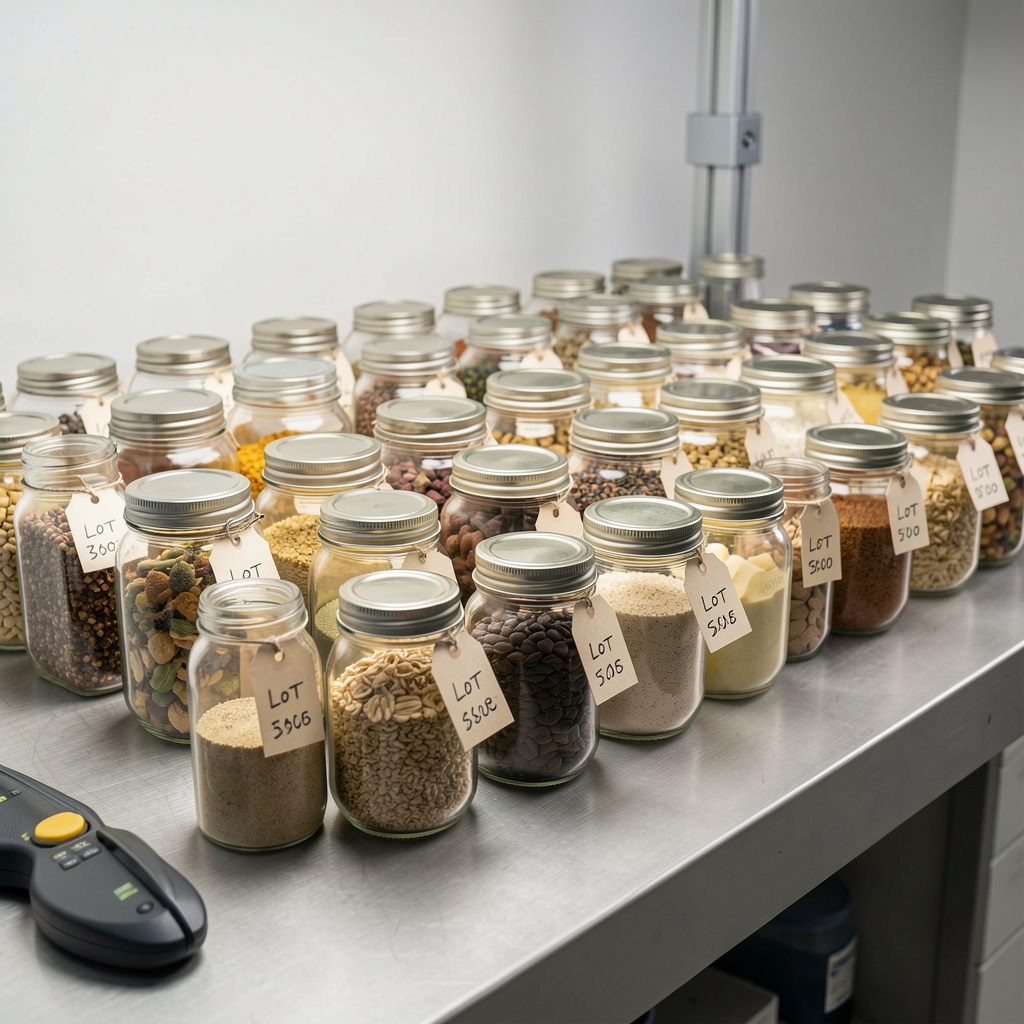
Sourcing assessment, Lot SC-19
Independent Batch Verification
Ingredient profiles in Talmon frameworks are selected based on published nutritional research and undergo independent batch verification for quality and labelling accuracy. Third-party verification is conducted by an independent laboratory and includes compositional analysis and a certificate of compliance with applicable food-supplement labelling standards.
Verification records are filed in the archive with the relevant batch lot reference. Where a batch does not meet the compositional specification, it is not incorporated into the framework record, and the non-conformance is logged with a corrective action note.

Third-party verification visit, 2025
Framework Archiving & Revision
Verified frameworks are entered into the Talmon archive with a lot reference, sourcing notes, revision date, and compositional record. The framework is then reviewed quarterly. Where new published nutritional research, updated sourcing conditions, or revised observation data prompts a change, the framework entry is updated.
Prior versions of a framework are not deleted. Each revision is retained with an annotation describing what changed and on what basis. This creates a traceable record of how the guidance has evolved, which participants and researchers can access on request.

Archive management, revision log 2026
The sourcing and verification standards applied to every archive entry.
Food-Grade Sourcing
Active ingredients are sourced from documented suppliers whose facilities maintain food-grade processing standards. Sourcing prioritises suppliers with verified chain-of-custody documentation and named-region material provenance where possible.
Standard: SC-FG-01 — Revision 03, 2025
Independent Verification
Ingredient profiles are selected based on published nutritional research and undergo independent batch verification for quality and labelling accuracy. Every archived batch carries a third-party verification reference alongside the Talmon lot code.
Standard: VR-TP-02 — Revision 02, 2024
Archive Traceability
Each archive entry carries a unique lot reference that traces to the sourcing record, the verification certificate, and the observation data that supported the framework. Revision history is retained indefinitely. No entry is deleted when updated.
Standard: AR-TR-04 — Revision 04, 2026
Quarterly Review Cycle
All framework entries are reviewed against new published nutritional research on a quarterly cycle. Seasonal produce entries are reviewed at the start of each seasonal period. Sourcing assessments are reviewed annually and updated when supplier conditions change.
Standard: RV-QC-01 — Revision 05, 2026
Regional Sourcing Preference
Where UK-regional seasonal produce is available and verified, it is given preference in framework documentation. Regional sourcing records note the supplier locale, approximate distance-to-market, and the seasonal window during which the ingredient is catalogued as accessible.
Standard: SC-RG-03 — Revision 02, 2025
Research-Informed Selection
Ingredient and framework selection is informed by published nutritional research rather than commercial positioning. Where research on a particular ingredient or eating pattern is sparse or preliminary, the archive entry notes the limitation and the degree of confidence applied to the framework recommendation.
Standard: RS-EV-02 — Revision 03, 2025
A categorised view of the sourcing landscape.
The Talmon sourcing record categorises suppliers into four tiers based on documentation quality, regional proximity, and consistency of supply across seasons. Tier classifications are reviewed annually and adjusted when supplier conditions change.
Talmon products are nutritional food-supplements registered with the applicable local regulatory authority under food-supplement classification. Products meet compositional and labelling requirements for nutritional supplement categories.
Tier 1 — Verified Regional
UK-regional suppliers with full chain-of-custody documentation, named-farm or named-cooperative provenance, and a minimum two-year supply relationship. Verified annually by independent audit.
Tier 2 — Verified National
UK national suppliers with documented chain-of-custody and certificate of composition for each batch. Annual review cycle. Elevated to Tier 1 after two consecutive years of verified supply with no non-conformances.
Tier 3 — Approved Import
International suppliers meeting UK food-grade processing standards, providing batch certificate of composition, and holding a minimum six-month supply relationship. Used for ingredient categories outside the UK seasonal window.
Tier 4 — Under Assessment
New suppliers under active assessment. Batch composition is independently verified before Tier 4 materials are included in any archive entry. Framework entries referencing Tier 4 materials carry a provisional note.
How each archive entry is structured and maintained.
Entry Structure
Every archive entry is structured around a fixed template that ensures consistency across framework types. The template includes: a lot reference (unique per entry), the observation data reference from which the framework was derived, ingredient sourcing notes with supplier tier, verification records, revision history, and a plain-language summary of the framework.
Cross-references to related entries are maintained as an index rather than embedded links, ensuring that each entry remains self-contained and readable independently of other archive material.
Revision Protocol
When a framework is revised, the original entry is preserved in full with a date stamp and a brief note explaining the basis for revision. The revised entry is assigned an incremented revision number and linked to the original. A summary of all revisions made in a given quarter is published in the archive index.
Revisions are classified as minor (correction of a factual error or updated sourcing data), moderate (adjustment to a framework based on new research), or significant (substantial change to the framework structure based on observation data). Significant revisions are flagged in the quarterly archive update.
Frequently noted questions about the Talmon method.
Participants are UK-based adults who have contacted the Talmon archive through the correspondence programme or via direct enquiry. There is no formal selection process. The cohort reflects a cross-section of the correspondence programme participant base, which skews toward working adults in mid-career with varied activity levels.
The observation data is not formally published in a peer-reviewed journal at present. The frameworks are described as evidence-informed rather than evidence-generated: they are built on the basis of published research in combination with the observation data, not on the basis of the observation data alone. The distinction is noted in every archive entry.
Anonymised summary data from the UK observation cohort is available to correspondence programme participants on request. Full individual records are not accessible, as they contain personally identifiable information. Requests for access to the anonymised summary dataset should be directed to the Talmon archive desk.
Where published nutritional research on a framework-relevant topic is contradictory or preliminary, the archive entry documents both positions and notes the degree of uncertainty. Frameworks are not published as certain recommendations when the evidence base is divided. In those cases, the archive entry is marked as provisional and reviewed at the next quarterly cycle.
Questions about the observation data or framework sourcing.
Archive desk enquiries are handled by the Talmon team at 29 Hoxton Square, London N1 6NN, Monday through Friday, 09:00 to 18:00.